Procrastination and your phone

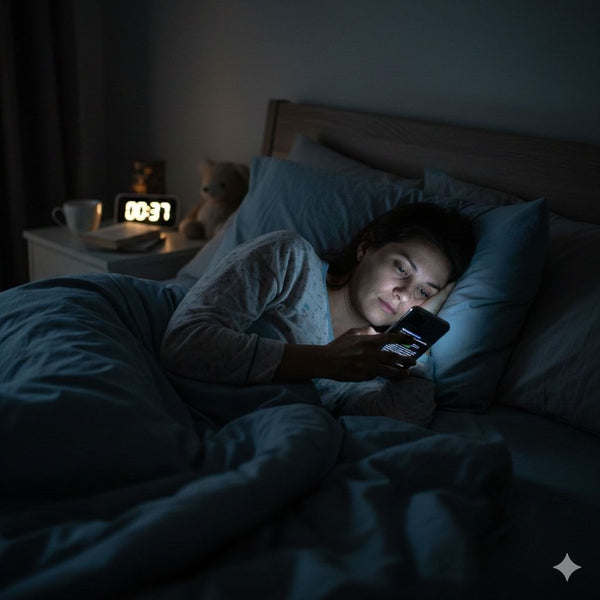
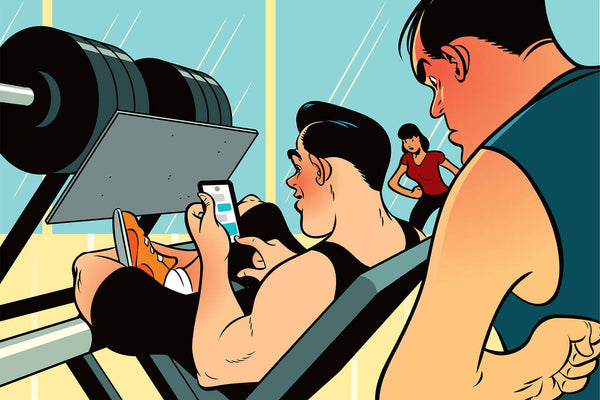
Here is something that took me a while to believe: procrastination is not really a time problem. It is a feeling problem. And your phone is the fastest tool ever invented for making an uncomfortable feeling disappear.
What is actually happening when you put something off
Researchers who study procrastination, among them Dr Tim Pychyl and Dr Fuschia Sirois, reached a conclusion that changes how you see the whole thing. We do not put tasks off because we are lazy or bad with time. We put them off to escape how a task makes us feel: the doubt, the boredom, the small fear that we will not do it well enough. Avoiding the task brings instant relief, and the brain quietly files that relief away as a reward worth repeating.
Now drop a phone into that moment. The task in front of you feels effortful and uncertain. The phone offers the exact opposite, something easy, bright and endless, available in under a second. Faced with that choice, of course the hand reaches for the phone. It is not weakness. It is a brain doing what brains are built to do: take the quick comfort over the slow reward.
Why the phone in particular is so hard to resist
The apps we reach for are built on the same principle that makes fruit machines so compelling: unpredictable rewards. Sometimes a swipe gives you something good, most times it does not, and that uncertainty is precisely what keeps you pulling. Psychologists call it a variable reward, and it is one of the most powerful habit-builders ever documented. You are not simply up against a screen. You are up against decades of careful research into what keeps people coming back.
So the usual advice tends to crumble. "Just start" ignores the feeling you are trying to escape. "Use willpower" asks the tired, stressed version of you to win a fight the calm version already finds hard. "Delete the apps" lasts until the weekend, and costs you the useful half of your phone in the meantime.
A calmer way through
Here is the part worth holding on to. That uncomfortable feeling at the start of a task passes on its own, usually within a few minutes, as long as nothing rescues you from it. The trouble is that the phone always rescues you, right on cue.
So remove the rescue, not the phone. That is the idea kip is built on. You tap a small smart tag and the apps you disappear into simply go quiet, while everything genuinely useful, your calls, maps, music and the tools you actually need, keeps working. The easy exit is closed, the discomfort passes, and you notice you have already begun. One more tap when you are done brings it all back.
You do not need more discipline. You need the escape hatch shut for an hour, so your own attention has the chance to settle.
The short version
Procrastination is your brain sidestepping a feeling, and your phone is the easiest sidestep there is. Take that sidestep away for a while, and starting becomes a great deal easier.
Ready to start the thing you keep putting off? See how kip works.
Frequently asked
Why does my phone make me procrastinate? Procrastination is a way of escaping an uncomfortable feeling about a task, and your phone offers instant, reliable relief from that feeling. The apps also use unpredictable rewards, which makes the habit especially sticky. Remove the easy escape while you work and starting becomes far easier.
Is procrastination a sign of laziness? No. Researchers understand it as an emotion problem, not a character flaw or a failure of time management. You are avoiding how a task feels, not the work itself.
Read next
Part of the kip journal: an honest weekly note on focus and a calmer relationship with your phone.